Connection is what culture truly means in Tambakunda
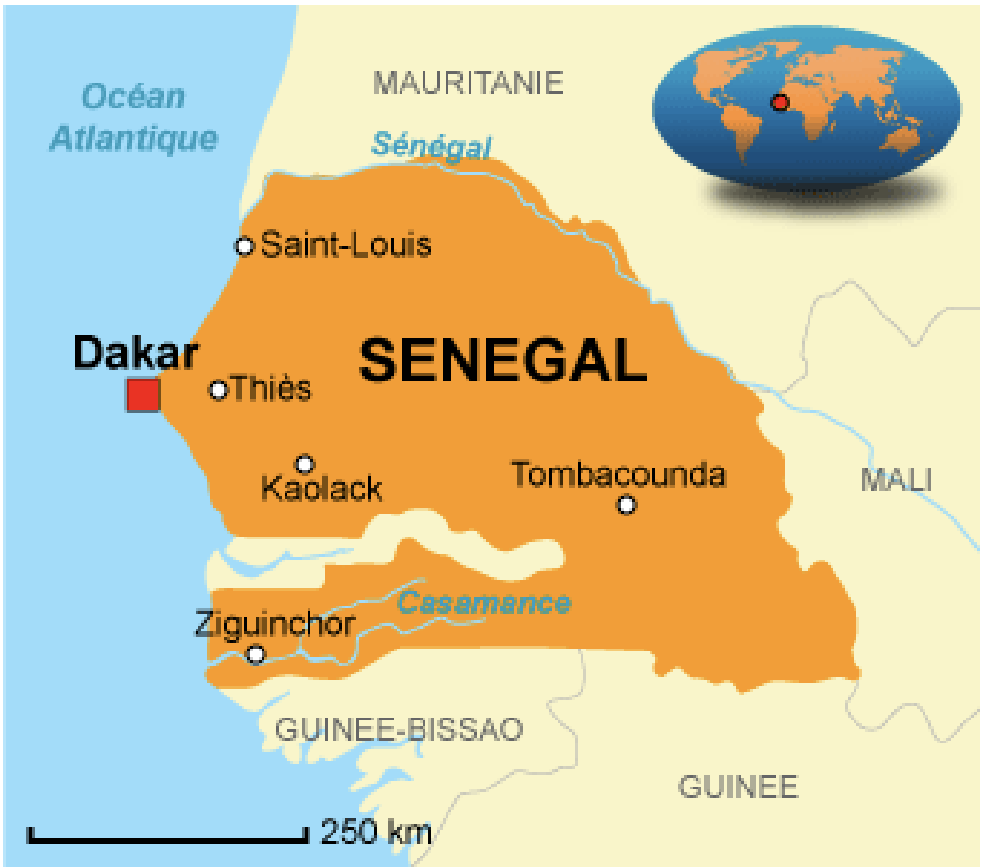
In South Africa, West Senegal, Tambakunda is located. In a village where Khady explained “Everybody knew each other, and children play outside together.” From neighbors who did not just live next door but were part of everyday life, who enjoy being open and attentive, making small chat and actually caring about who lives around, enjoying meals during celebrations. Friends who spent almost every afternoon playing together and her grandmother’s small apartment in Maka. And let’s not forget religion, which plays a huge role when Khady needs to make decisions.
One of the clearest access points into her culture was her grandmother’s house. Even though it only has four rooms, she describes it like it is the comfiest place in the world. Khady said it is her favorite place and that her grandmother is very important to her, even said “I love her more than I love my parents. That statement surprised me at first, but the more she explained, the more it made sense. Her grandmother represents stability and comfort, because her grandmother cooks, and chats with her, making Kadhy feel fully at home. Proving that narrow hallways, simple furniture or small windows doesn’t matter if a place makes you feel like home. It shows that what makes a space or a simple building powerful is not what is inside it physically. It is the feeling of belonging and caring. The house becomes more than a simple building. It becomes a place of comfort and identity.
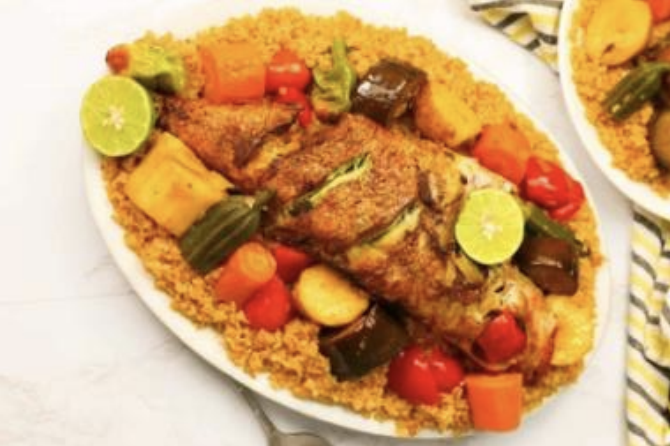
Food also carries that same sense of unity. She talked about Thieboudienne, a rice and fish dish prepared for weddings, funerals, and community gatherings. It is not just a meal, it is an event. As Khady mentioned, “Sometimes it is cooked for the entire village.” A moment where not only the consumers enjoy but also the cookers while they sit together cutting vegetables, chatting and catching up, sharing what’s new in their lives, what their husbands bought them for their anniversaries, and laughing about anything. Certainly, a moment full of joy and connection, where no one eats a lone and the smell from this delicious dish is going around each of those next-door neighbors who instead of being strangers, have gathered and now form a community with one another. The food connects generations, linking celebrations and mourning through the same shared taste. Culture, in this way, is something anyone can have, just need to be ready to socialize and support one another.
Religion is another foundation of her identity. As Kadhy notes, “My religion gives me value in my daily life”. Her faith is not separate from her culture. It shapes how she makes decisions, how she treats others, and how she understands right and wrong. Even when she feels tempted to do something, she thinks about whether it aligns with her beliefs or if it will make any bad to her as she told me some of her friends choose to haram (sin) going to clubs, drinking or smoking. But for her religion becomes a guide which is present in everyday actions. She also said that when in CCNY and she sees students who follow the same religion as her, listening to the Quran, she feels home sick. Because as mentioned before, for her religion means culture, it is what she was born with, she cannot change it but stick with it and keep closer.At one point Khady said, “In Senegal, I feel fully at home. And here I feel like I’m balancing two different cultures.” That sentence made me think about James Baldwin in Stranger in the Village. Baldwin writes about what it feels like to exist between worlds and how identity can become more visible when you are placed somewhere unfamiliar. In his experience, being in a Swiss village made him hyperaware of how he was seen. In a different way, Khady also becomes more aware of her identity here. In Tambakunda, culture surrounds her naturally. She does not have to learn a new language or worry about making mistakes while speaking. She does not fear someone laughing at her accent the way her step-brothers sometimes do. She does not need to explain her traditions or clarify why certain behaviors matter to her. Everything feels understood without effort.
Even friendships function differently. As Khady mentions, “we can stay like a month, we’re not gonna talk, and one day, boom, we go outside, maybe playing something fun together. After those days, boom, we act like we don’t know each other. When in Africa, I be it, stick to my friend the other days.” Her words show the instability she feels here. Friendships seem temporary, inconsistent, harder to trust. In Senegal, connection feels steady and continuous. Here, it feels uncertain. She also describes how different it is to move from a close, friendly environment to a large city where everything is unknown, even the neighbors next door. In Tambakunda, people know each other’s families, histories, and routines. In New York, people can live side by side without ever speaking. That contrast creates a kind of distance that she can feel. Because of that, she often has to adjust herself depending on where she is. Here, she thinks more about how she speaks, how she acts, and how others might see her. She tries to stay true to her beliefs while also fitting into a space that feels very different from home. Sometimes it seems like she is living in two places at the same time, one where everything feels familiar and easy and another where she has to be more careful and aware. Even if she’s welcome in both, they do not feel the same.
Exploring Khady’s culture also made me reflect on my role as the interviewer. As someone looking into her world from the outside. I notice how strong her sense of unity is, how central her grandmother is, how powerful shared meals can be and how closer anyone can be with their neighbors. There are emotions, memories, and meanings attached to those spaces that I cannot fully experience. Also, through her experiences, I began to understand that culture is not static. It moves with her. It travels across borders. It exists in memories of warm evenings, in the smell of cooking, in the quiet comfort of her grandmother’s four-room apartment, and in the way she measures her actions through her religion or if she’s following the Quran. Even while living between two places completely different places, religion, food and culture remain part of her. Culture for her is religion, connection and meals. But mostly important, feeling comfortable with herself.
References:
Baldwin, James. “Stranger in the Village.” Notes of a Native Son, Beacon Press, 1955.
Image 1 https://evsglobalchange.wordpress.com/wp-content/uploads/2010/03/cartesenegal3.gif
Image 2 https://www.africanbites.com/thieboudienne-ceebu-jen-poisson-au-riz/
AI Transparency Statement:
I did use AI to clarify some of my statements, or my grammar issues. I felt the need to use AI when I got tired and really needed clarification and understanding to finish an idea, that happens a lot because I’m very indecisive. Also, when I got some phrases or words in mind, but they are in my own language. In the end, I think using AI can be very helpful and beneficial if everyone knows how to use it responsibly.
Reflection Letter: Cultural Profile
After reading the feedback from my Cultural Profile, I came to understand that I did a
good job explaining certain aspects of culture such as friendship and family. However I also
learned that I still need to improve my writing. I need to make my paragraphs more balanced in
length, give the same level of detail and explanation to each topic, use direct quotes from sources
and include more vivid details so the reader can engage more with my writing.
One important Course Learning Outcome I worked on was learning to negotiate my own writing goals and audience expectations regarding conventions of genre, medium, and rhetorical situations. My goal was to present Khady’s culture in a respectful and meaningful way but I now see that I also needed to think more about what the audience needed in order to connect with the story. For example, my professor mentioned that the introduction needed more vivid details about Tambakunda and that it should be engaging since it is the first thing someone reads and can influence whether they continue reading. This showed me that readers need concrete descriptions and strong imagery to imagine the place. Giving specific details about Khady’s grandmother’s home would also help readers picture themselves in the text and better understand the connection between Khady and her grandmother’s house.
Another Course Learning Outcome I used was acknowledging linguistic and cultural differences as resources. In this project, I explored Khady’s background, traditions, family values and ideas about friendship. I especially focused on how friendship was understood through Khady’s perspective. I am proud that this section was one of the strongest parts of the paper because it showed a deeper and more personal side of culture. It also helped the reader understand how valuable friendship is for her, which was really my goal when I decided to write about her life in Tambakunda. I also worked on engaging in genre analysis and composing for different audiences. Since this assignment combined research, storytelling and reflection I had to think carefully about how to present information in an interesting way. My feedback about the Baldwin paragraph helped me understand that I should have included a direct quote and divided the paragraph more clearly. This would have made my text stronger and clearer.
This assignment taught me that writing is not only about sharing information but also about helping readers understand another perspective. My strengths were organization, conclusion and analysis of friendship. My weaknesses were not using enough descriptive details and not balancing some sections of the essay. In future writing, I want to create stronger imagery, use sources more efficiently and continue developing my voice as a writer.

